Bữa sáng truyền thống Nhật Bản ngon nhất ở Tokyo: Ginza Inaba

Japanese Breakfast
It’s a frequent refrain among international visitors: “There’s no breakfast in Japan!”
Around 5am, trains start back up, late night revelers are shuttled to their beds and the earliest risers ride silently towards sleeping office buildings. Yet, scarcely a lamp is lit across Tokyo’s thousands of cafes and bakeries. So what is a traveler to do with an empty belly and a craving for authentic Japanese experience?
Many visitors are faced with two choices for breakfast. Wait till lunch, or suck it up with yet another conbini sando. Even late morning brunch opportunities are few and far between, as the lines blur between Japanese mealtimes and structures. While pancakes, eggs and juice are siloed into breakfast time for many international visitors, they’re enjoyed later in the day in Japan. Japan’s food culture begs the question, why not start your day with grilled fish and noodles and have your donut at 3pm?
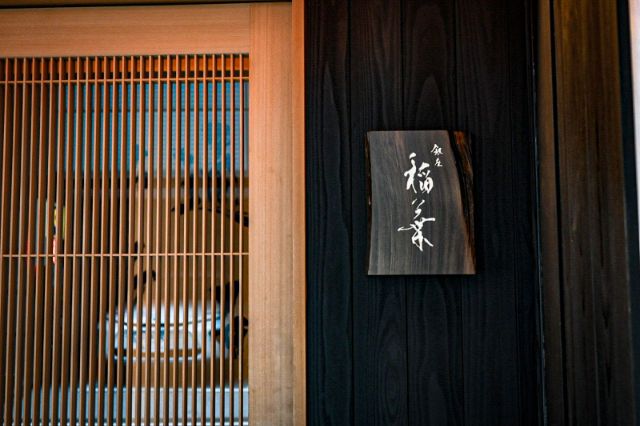
Ginza Inaba owner Masanobu Inaba and chef Ryuichi Kaneko reflect on their career at esteemed brands like AMAN and Conrad Hotels to bring international visitors a morning they can look forward to. At hotels, they believe, breakfast is served with care and dignity. At Ginza Inaba, that level of hospitality is delivered without an overnight stay. The pair takes pride in providing a one of a kind chance to enjoy traditional Japanese breakfast as it was meant to be served. If you want to try it, breakfast starts at 10:30 am sharp, by appointment only.
Ginza Inaba
Ngày nghỉ:Không cố định
Giá trung bình:[Dinner] 40,000 JPY
Cách di chuyển:
Địa chỉ:8-12-15, Ginza, Chuo-ku, Tokyo Bản đồ
Chi TiếtĐặt Chỗ
A Traditional Morning Meal
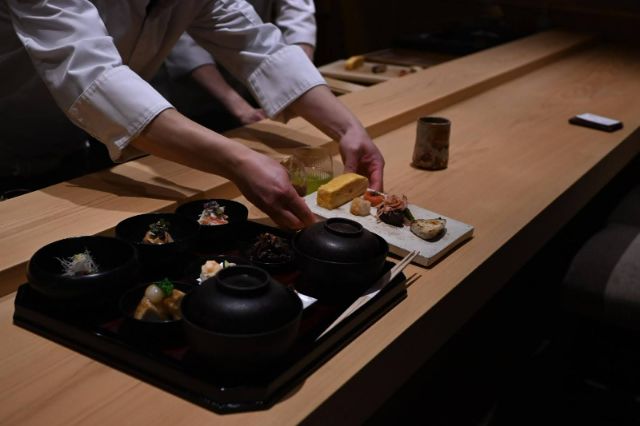
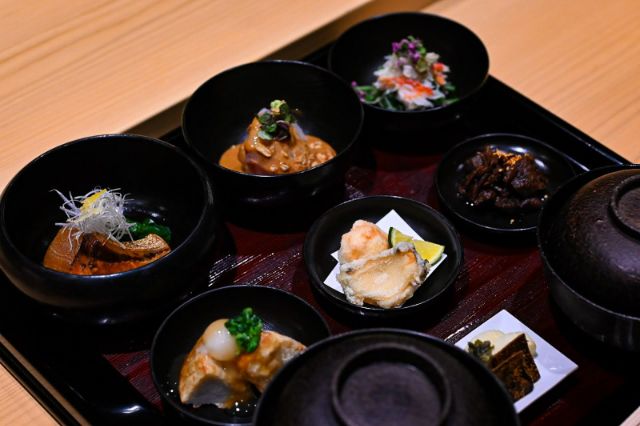
The course always starts with tofu, because it's a mild flavor and texture that offers good nutritional balance without overstimulating the body or palate. In a word, it’s light.
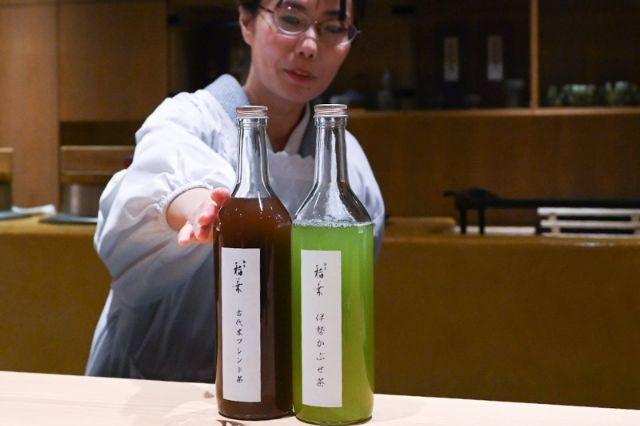
Next comes cold-brew tea, one made with floral green tea the color of jade and the other a brownish-purple and mildly sweet from the blend of six-grain rice used to enhance its aroma.
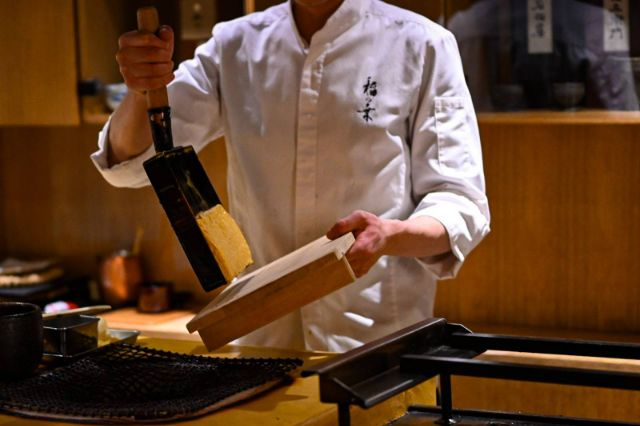
Dashimaki tamago, a Japanese omelet
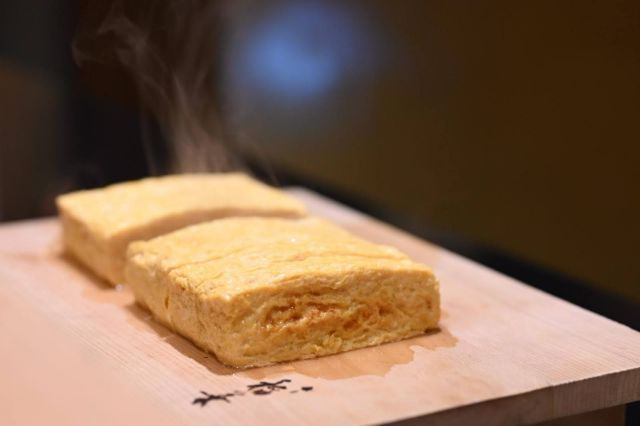
As the eggs cook, the chefs carefully drain excess oil and liquid, shift the eggs’ position in the pan, and toss it to flip. After a few minutes, the egg has grown to about three centimeters in height, but still perfectly yellow, with no browning, thanks to the chef’s skills.
Year round favorites
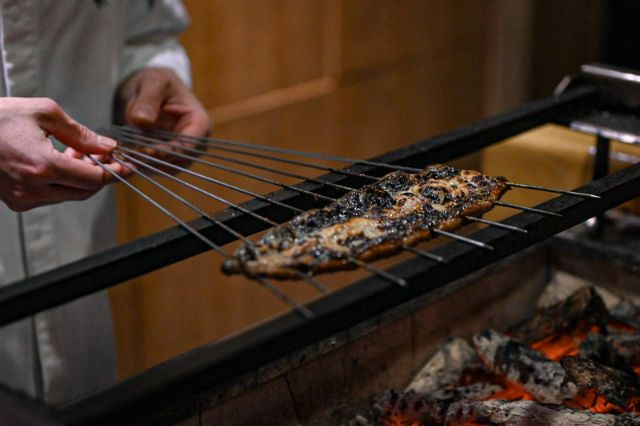
As it cooks, the chefs hoist the whole fillet up by long skewers and paint on glossy tare. The end result is a diner favorite – soft and flakey on the inside, with a nice crunchy skin. Topped with Japanese numbing pepper, called sansho, it’s a balanced but addictive bite. Seconds are encouraged.
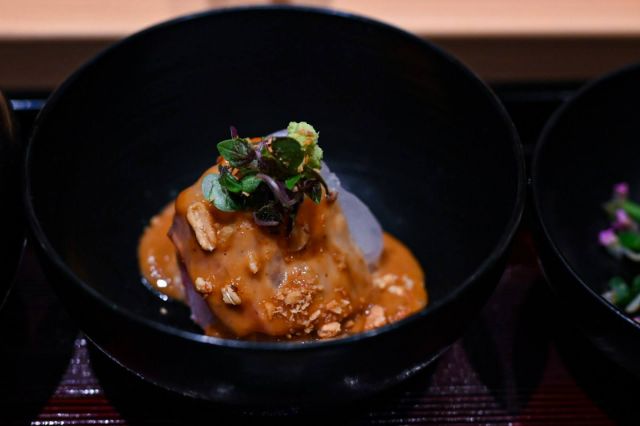
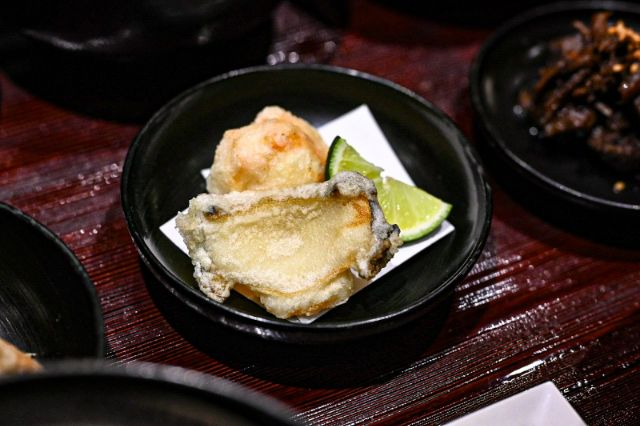
Winter Specialties
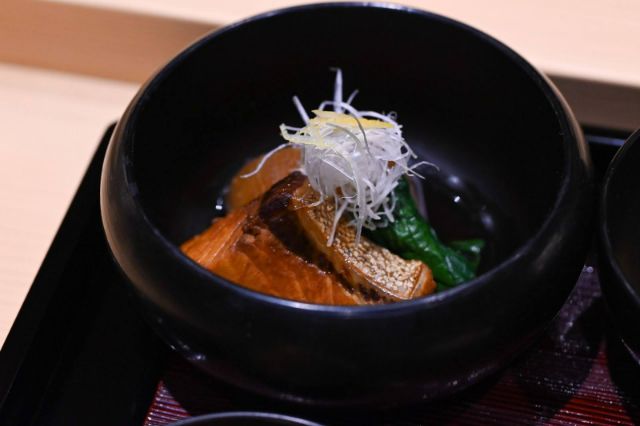
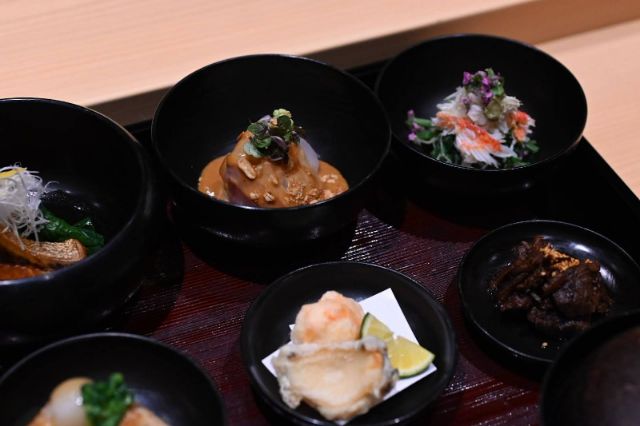
The grilled dishes are sawara, a particularly delicious variety of shiitake mushroom with a thick, meaty texture, and grilled brussels sprout served with freshly grated katsubushi. Crushed daikon and mentaiko (spicy, cured cod roe, also a famous Kyushu product) and pickles are strongly flavored nibbles that represent essential Japanese condiments.
Ginza Inaba
cơm trắng
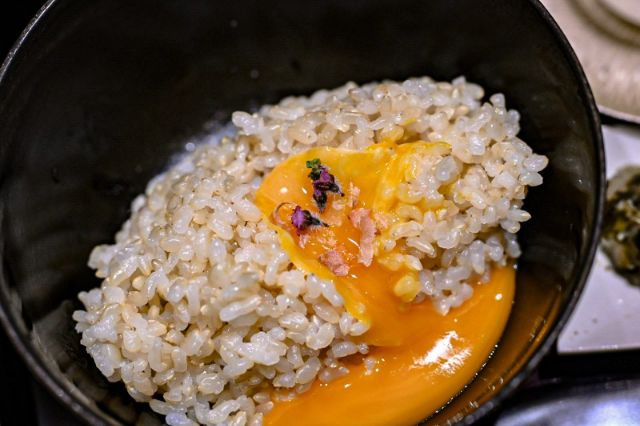
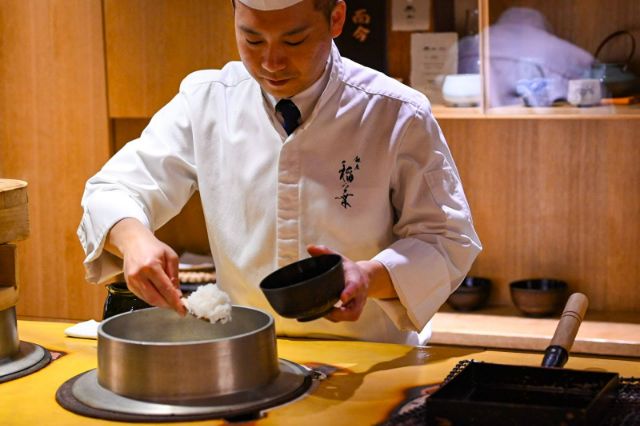
While Chef Kaneko recommends enjoying the rice by itself first, second helpings can be topped with fresh-grated katsuobushi (shavings of dried skipjack tuna) or raw eggs, one of Japan’s most traditional breakfast time meals. Tamagokakegohan is a simple dish of rice topped with a whole raw egg or egg yolk and at Ginza Inaba, doused with a dashi broth and soy sauce mixture. Nourishing and simple, the chef has been surprised that even international diners become fast fans, sometimes enjoying 2 or 3 TKG in a single sitting!
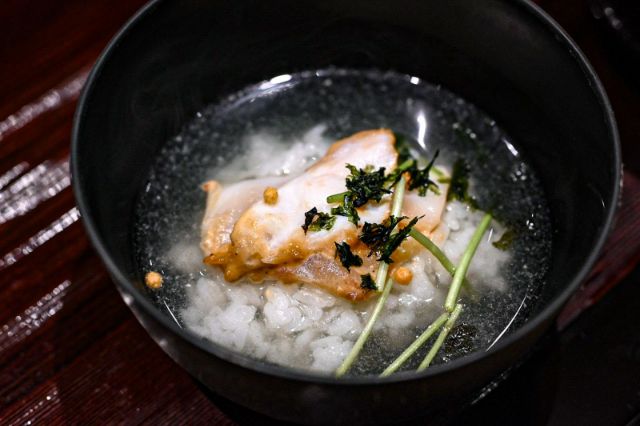
Since rice is often considered the soul of Japanese food, at Ginza Inaba, where the spirit of hospitality is felt in every bite, it only makes sense that the rice is of the highest quality.
The Spirit of Hospitality
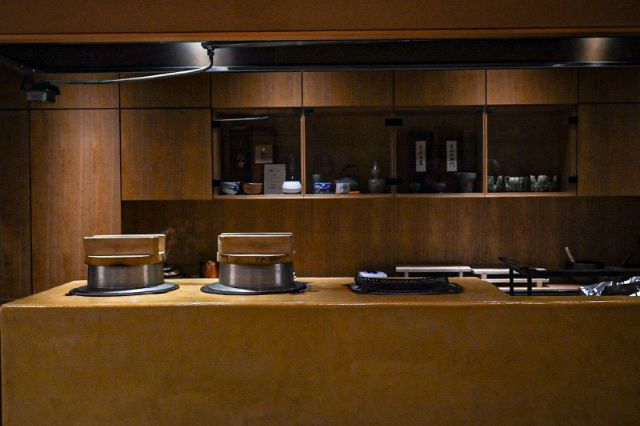
Ginza Inaba recreates the essential interior components of a classical ryokan. Ryokan and ryotei are the progenitors of traditional Japanese dining as we now know it, places where people enjoyed meals, rest, and entertainment. Both are deeply tied to Kyoto, as evidenced by the distinct flavor of Kyoto-style cooking in the most traditional washoku. This unadulterated washoku is represented in Ginza Inaba’s Japanese breakfast.
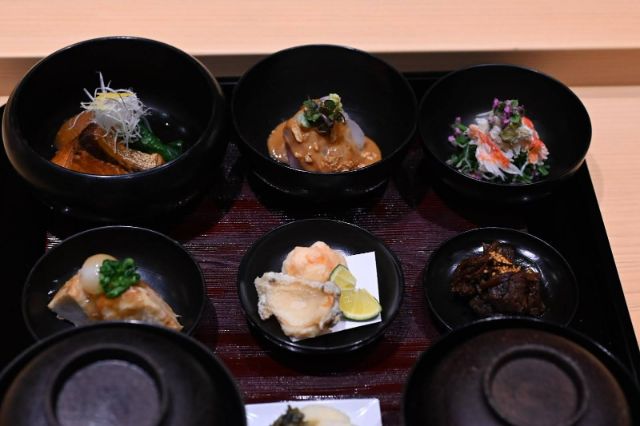
The textures and weights of elements are deeply considered, such as with nested oryoki bowls from traditional buddhist cuisine, applied here to hold a variety of small sides. Yotsuwan style serving ware from chakaiseki, the tea ceremony meal, are delicately textured, just big enough to wrap hands around and bring up for sipping or shoveling. Don’t worry, Chef Kaneko assures us, shoveling the last few bites of rice from the bowl right into your mouth is the typical “Japanese way”.
About Inaba
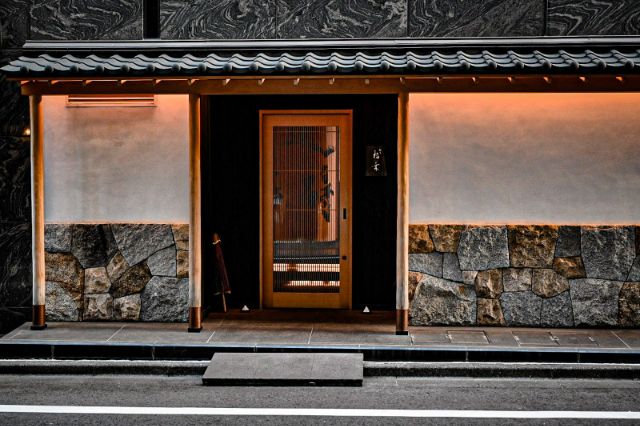
During dinner service, innovative dishes like shark-fin broth are mixed in with traditional foods that use the five colors and five cooking methods of Japanese cooking. The menu is similar to the kaiseki style diners enjoy in fine ryokan, just like the breakfast course. After earning many international fans, guests sometimes come back to Japan to make a special trip to Ginza Inaba and enjoy the restaurant’s seasonal menu changes. These days, Inaba entertains many guests from around the globe, but always reserves two seats to make sure that local regulars continue to feel welcome and well-cared for.
About Chef Ryuichi Kaneko
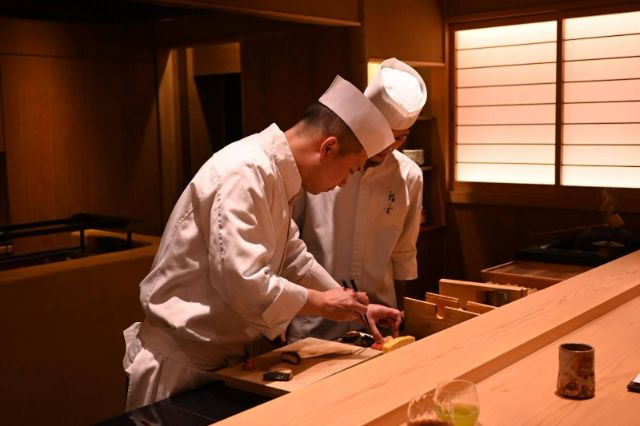
Chef Kaneko has been working with Chef Inaba for 16 years, delivering ryokan level hospitality in a restaurant setting. During dinner service, he infuses the course menu with the essence of his home town. Classic Nagasaki dishes like champon are served to finish, and ingredients from nearby islands are used often.
The Last Bite
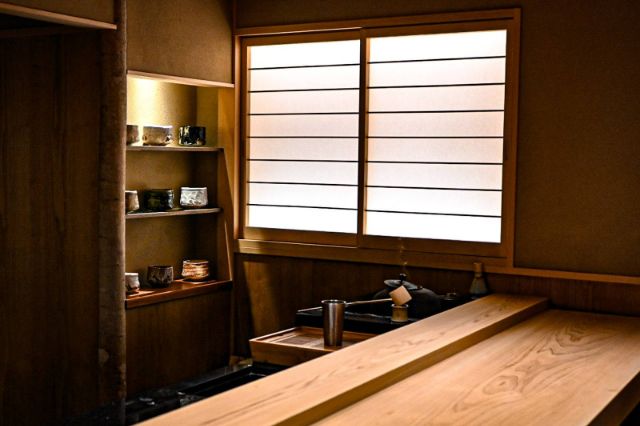
Guests are spellbound by simple flame-grilled ingredients and carefully brewed tea. With its late start and nourishing ingredients, guests can enjoy the morning at their leisure and head out ready to face another great day of travel in Tokyo.
Lưu ý: Tất cả thông tin đều chính xác tại thời điểm xuất bản.
Cảm ơn bạn đã đọc bài viết của chúng tôi.
Mục tiêu của chúng tôi là nâng tầm hành trình ẩm thực của bạn bằng cách giúp bạn tìm được nhà hàng hoàn hảo nhất. Với SAVOR JAPAN, bạn có thể dễ dàng tìm kiếm và đặt chỗ tại
Các nhà hàng ẩm thực Nhật Bản nằm trong và xung quanh khu Ginza đáp ứng mọi nhu cầu của bạn.
Khám phá thêm các nhà hàng sushi theo khu vực
- Khu vực Tokyo
- Gần Tokyo
- Khu vực Kyoto và Osaka
- Khu vực Hokkaido
- Phía bắc Honshu (Đông Bắc)
- Trung tâm Honshu (Chubu)
- Phía tây Honshu (Chugoku)
- Shikoku
- Kyushu
- Quần đảo Okinawa và Ryukyu
Khám phá thêm nhiều nhà hàng để thưởng thức ẩm thực Nhật Bản theo khu vực
Bài viết liên quan
-
Trải nghiệm ẩm thực Nhật Bản đích thực tại 5 nhà hàng đáng chú ý ở Ginza, Phố người lớn
Khi đến Tokyo, khu vực nhất định phải ghé thăm chính là Ginza. Với các trung tâm thương mại và cửa hàng flagship của các thương hiệu cao cấp, Ginza tràn ngập các nhà hàng sang trọng mang đến hương vị đích thực. Tại khu phố tinh tế này, sao bạn không thử trải nghiệm ẩm thực Nhật Bản truyền thống? Thưởng thức sushi, tempura, sukiyaki, shabu-shabu, cùng nhiều món ăn khác, tận hưởng hương vị Nhật Bản và tạo nên những kỷ niệm khó quên trong suốt hành trình của bạn.
-
5 Nhà hàng được chọn để thưởng thức ẩm thực Nhật Bản chất lượng cao tại Ginza, Tokyo
Ginza, một khu phố sầm uất tiêu biểu của Nhật Bản, tập trung vô số cửa hàng thương hiệu cao cấp từ khắp nơi trên thế giới, là trung tâm văn hóa, thời trang và thương mại. Bài viết này sẽ giới thiệu những nhà hàng nơi bạn có thể thưởng thức ẩm thực Nhật Bản chất lượng cao ngay tại khu vực tinh tế này. Chúng tôi đã lựa chọn kỹ lưỡng những nhà hàng không chỉ ngon miệng mà còn sang trọng và thoải mái. Nếu có dịp ghé thăm Ginza, bạn nhất định phải ghé qua.
-
Trải nghiệm các cửa hàng và quán cà phê cà phê truyền thống của Nhật Bản tại Tokyo Kissaten này
Kissaten Nhật Bản là gì, và những quán kissaten nào Tokyo là tốt nhất cho người mới bắt đầu? Hãy cùng tìm hiểu về những quán cà phê truyền thống của Nhật Bản, nơi bạn có thể đắm chìm trong hoài niệm, văn hóa cà phê và mùi khói thoang thoảng của những năm tháng xưa cũ.
-
Tokyo Tháng 10: Ẩm thực Nhật Bản với Nghệ thuật & Món chay Shojin Ryori Omakase ở Omotesando
Nhà hàng Tokyo October phục vụ các món ăn Nhật Bản truyền thống (washoku), bao gồm cả các món shojin ryori chay và kaiseki, trong một không gian mang dáng dấp của một ngôi chùa do các nghệ sĩ Món Pháp thiết kế. Nghệ thuật và kiến trúc đến từ các hãng thiết kế nổi tiếng, trong khi ẩm thực được tạo ra bởi một đầu bếp có niềm đam mê sâu sắc và am hiểu về washoku. Ông đã theo đuổi nền ẩm thực truyền thống Nhật Bản đến tận gốc rễ trong hơn ba mươi năm, chuyên về trà đạo và ẩm thực Nhật Bản.
-
THE SAKAI Tokyo Kyobashi: Trải nghiệm Omakase sushi đậm chất nghệ thuật
Hãy trải nghiệm nghệ thuật làm sushi bậc thầy được khai sinh tại Frankfurt, Đức và được tái hiện lại từ cội nguồn. Nhà hàng THE SAKAI Tokyo, thuộc thương hiệu đạt giải thưởng Michelin của đầu bếp Hiro Sakai, là sự bổ sung mới nhất cho di sản văn hóa sushi quốc tế. Hãy đến Kyobashi để có một trải nghiệm ẩm thực trọn vẹn, được chế biến với sự tôn trọng dành cho thực khách quốc tế và giữ gìn bản sắc địa phương.
![[Osaka] 5 nhà hàng nổi tiếng nhất & Lựa chọn của biên tập viên](https://rimage.savorjapan.com/svj/image/discover_oishii_japan/6978/article_head.jpg?t=1772016962)
Bài viết mới
-
Tochigi Travel Guide: Nikko, Ashikaga & Local Food Bookings
-
7 Top Eel Restaurants in Fukuoka Where You Can Make Reservations! Enjoy Exquisite Unadon, Seiro-Mushi, and Hitsumabushi Without Waiting in Line
-
A Peaceful Day Trip from Tokyo: Discover the Hidden Charm of Kita-Kamakura
-
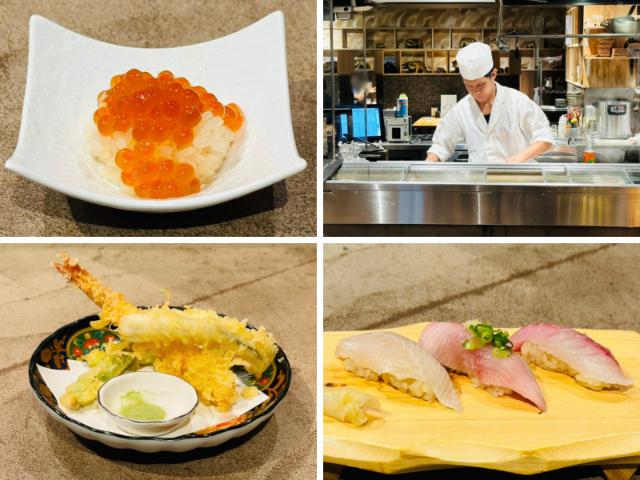
Món ăn và sushi ngon nhất Hokkaido ở Tokyo: Hokkaisushi đến Robata Sushiyama Shinjuku
-
![[Cẩm nang nhà hàng Tokyo] Hibiya Palace | Nhà hàng Món Pháp trong công viên Hibiya: bữa trưa, thực đơn, giá cả và mẹo Đặt Chỗ](https://rimage.savorjapan.com/svj/image/discover_oishii_japan/7238/article_head_150x105z.jpg?t=1786598582)
[Cẩm nang nhà hàng Tokyo] Hibiya Palace | Nhà hàng Món Pháp trong công viên Hibiya: bữa trưa, thực đơn, giá cả và mẹo Đặt Chỗ
Thể loại
Ẩm thực
- Bars (24)
-
Japanese Cuisine (706)
- Kaiseki (51)
- Nabe (22)
- Okonomiyaki (25)
- Shabu Shabu (38)
- Soba (19)
- Sushi (150)
- Tempura (20)
- Teppanyaki (45)
- Shojin Ryori (4)
- Tonkatsu (16)
- Kushiyaki (10)
- Yakitori (46)
- Sukiyaki (36)
- Japanese Cuisine (344)
- Oyster (3)
- Sashimi/ Seafood (34)
- Unagi (eel) (38)
- Motsu Nabe (offal hotpot) (12)
- Mizutaki (chicken hot pot) (4)
- Oden (9)
- Kaisendon (seafood bowl) (12)
- Udon (3)
- Taverns(Izakaya) Cuisine (137)
- Western Cuisine (42)
- Italian/French Cuisine (98)
- Yakiniku/Steak (235)
- Chinese Cuisine (27)
- Ramen (Noodles) Cuisine (25)
- Cafe/Sweets (71)
- Other Asian Cuisine (5)
- Global/International Cuisine (7)
- Alcohol (59)
- Other (11)
Khu vực
- Shikoku (10)
- Kyoto and Osaka (356)
-
Tokyo (493)
- Tokyo (309)
- Ginza (52)
- Roppongi (27)
- Shibuya (30)
- Shinjuku (52)
- Asakusa (21)
- Ebisu (15)
- Tsukiji (13)
- Các địa danh nổi tiếng Tokyo (5)
- Ueno (24)
- Akihabara (9)
- Ikebukuro (14)
- Jiyugaoka, Denenchofu, Nakameguro (9)
- Shimokitazawa (4)
- Kichijoji (3)
- Tachikawa (1)
- Omotesando, Harajuku, Aoyama (20)
- Akabane (1)
- Kagurazaka (4)
- Akasaka (10)
- Odaiba (2)
- Tsukishima, Harumi, Toyosu (3)
- Near Tokyo (106)
- Quần đảo Okinawa và Ryukyu (58)
- Hokkaido (124)
- Phía bắc Honshu (Đông Bắc) (31)
- Central Honshu (Chubu) (146)
- Phía tây Honshu (Chugoku) (33)
- Kyushu (96)
Lưu trữ
- September 2026(3)
- August 2026(6)
- July 2026(11)
- June 2026(10)
- May 2026(7)
- April 2026(18)
- March 2026(3)
- February 2026(13)
- January 2026(11)
- December 2025(9)
- November 2025(4)
- October 2025(3)
- September 2025(6)
- August 2025(11)
- July 2025(19)
- June 2025(18)
- May 2025(34)
- April 2025(43)
- March 2025(30)
- February 2025(36)
- January 2025(25)
- December 2024(69)
- November 2024(31)
- October 2024(15)
- September 2024(38)
- August 2024(65)
- July 2024(31)
- June 2024(54)
- May 2024(61)
- April 2024(28)
- March 2024(31)
- February 2024(42)
- January 2024(32)
- December 2023(20)
- November 2023(5)
- October 2023(10)
- September 2023(7)
- August 2023(18)
- July 2023(8)
- June 2023(8)
- May 2023(18)
- April 2023(15)
- March 2023(1)
- January 2023(1)
- April 2022(2)
- March 2022(2)
- February 2022(1)
- January 2022(1)
- July 2021(1)
- March 2021(1)
- February 2021(1)
- December 2020(1)
- October 2020(1)
- September 2020(2)
- August 2020(10)
- July 2020(6)
- June 2020(9)
- May 2020(11)
- April 2020(8)
- March 2020(8)
- February 2020(13)
- January 2020(9)
- December 2019(24)
- November 2019(8)
- August 2019(14)
- July 2019(15)
- June 2019(18)
- May 2019(17)
- April 2019(16)
- March 2019(22)
- February 2019(22)
- January 2019(26)
- December 2018(34)
- November 2018(40)
- October 2018(32)
- September 2018(11)
- August 2018(8)
- July 2018(6)
- June 2018(9)
- May 2018(10)
- April 2018(21)
- March 2018(74)
- February 2018(39)
- January 2018(25)
- December 2017(60)
Từ khóa
- Omakase
- Thuận tiện di chuyển
- Hợp túi tiền
- Ăn buffet (All-you-can-eat)
- Phong cảnh tuyệt đẹp
- phim hoạt hình
- Nghệ thuật
- Mùa thu
- Giải thưởng
- Vườn Bia
- Bữa sáng
- Gợi ý của đầu bếp
- Hoa anh đào
- Món Hoa
- Gần ga
- Gia vị
- Quầy tính tiền
- phiếu giảm giá
- Cua
- Văn hoá
- Dassai
- Hẹn hò
- vận chuyển
- Đầu mùa hè
- Lựa chọn của ban biên tập
- Tiếng Anh Có Sẵn
- Sự kiện
- Triển lãm
- Lá mùa thu
- Phù hợp với gia đình
- Nhà hàng nổi tiếng
- Điểm du lịch nổi tiếng
- Thức ăn nhanh
- lễ hội
- pháo hoa
- Trang trại hoa
- Wi-Fi
- Món Pháp
- Vị trí tuyệt vời
- Hướng dẫn
- Hibachi
- lẩu
- Hướng dẫn
- cây tú cầu
- Vệ sinh
- Chiếu sáng
- Món Ý
- Quán nhậu Izakaya
- Món Nhật
- Rượu Nhật Bản
- jingisukan
- Kaiseki
- Kappo
- Xiên que chiên (Kushiage)
- Kushikatsu
- Kyoto
- Đóng cửa muộn
- Bữa trưa
- Cách ứng xử
- matsusakagyu
- Michelin
- mizutaki
- Lịch trình mẫu
- monjayaki
- motsunabe
- Núi Phú Sĩ
- Thực đơn đa ngôn ngữ
- Lẩu (Nabe)
- Sân bay Narita
- Năm mới
- Ninja
- Mì
- Oden
- Bánh xèo Nhật Bản (Okonomiyaki)
- sự hiếu khách
- Suối nước nóng
- Osaka
- Osaka ga
- Điểm chụp ảnh
- bánh pizza
- quan hệ công chúng
- Phòng riêng
-
- xếp hạng
- Công thức
- Ẩm thực vùng miền
- Khu nghỉ mát
- Cơm tô (Donburi)
- những nơi linh thiêng
- rượu sake
- Hoa anh đào
- Sashimi
- nhím biển
- Khu vực Setouchi
- Shabu Shabu
- tham quan
- Món ăn đặc trưng
- Mì Soba
- Chào đón thực khách đi một mình
- Thức ăn cay
- Mùa xuân
- Bít tết
- Mùa hè
- Hoa hướng dương
- sushi
- mang đi
- Teppanyaki
- Chỗ ngồi sân vườn
- Tokyo
- Trải nghiệm Tokyo
- Tháp Tokyo Skytree
- Tháp Tokyo
- lươn
- UNESCO
- Thuần chay
- Món chay
- Thịt bò Wagyu
- Gợi ý từ trang web ẩm thực nổi tiếng
- Rượu whisky
- Rượu vang
- Mùa đông
- Hoa tử đằng
- workshop
- Di sản thế giới
- Các nhà văn thế giới
- Yakiniku
- Yoshoku
- Yuba
- Thiền
Khám phá nhà hàng theo khu vực
-

Khu vực Tokyo
Tokyo, thành phố lớn nhất Nhật Bản, trung tâm văn hóa ẩm thực của cả nước. Nơi đây tập trung tất cả những nhà hàng với đa dạng các loại ẩm thực, trong khi chợ cá Toyosu nhận nhiệm vụ cung cấp nguồn hải sản tươi ngon nhất cho các đầu bếp.
-

Gần Tokyo
Các khu vực ven biển, núi và thung lũng quanh Tokyo tràn đầy những điểm du lịch hấp dẫn như suối nước nóng và khu trượt tuyết, nơi bạn chỉ có thể thưởng thức những món ăn đặc sản độc đáo chỉ có ở địa phương.
-

Khu vực Kyoto và Osaka
Kyoto và Osaka cùng các khu vực lân cận đã có ảnh hưởng sâu rộng đến văn hóa ẩm thực Nhật Bản từ thế kỷ thứ 7. Khu vực này nổi tiếng với các loại hình giải trí, thịt bò Kobe và nhiều món ăn truyền thống đa dạng.
-

Khu vực Hokkaido
Hòn đảo Hokkaido là nơi sản sinh ra nhiều loại nông sản chất lượng cao như gạo, thịt, rau củ, hải sản và trái cây. Những món ăn nổi tiếng của Hokkaido có thể kể đến robatayaki (món nướng chậm trên xiên) và mì Sapporo miso ramen.
-

Phía bắc Honshu (Đông Bắc)
Phía bắc đảo chính Honshu của Nhật Bản nổi tiếng với các loại trái cây và rau củ theo mùa, sản lượng đánh bắt cá hàng đầu cả nước (đặc biệt là cá ngừ từ Ohma), cùng thịt bò hảo hạng đến từ Yonezawa, Sendai và Yamagata.
-

Trung tâm Honshu (Chubu)
Chubu nằm ở trung tâm đảo chính Honshu của Nhật Bản, và văn hóa ẩm thực nơi đây phản ánh vị trí giao thoa giữa miền Tây và miền Đông đất nước. Khu vực này nổi tiếng với thịt bò Hida thơm ngon, núi Phú Sĩ lừng danh thế giới, cùng nhiều nhà máy rượu sake danh tiếng.
-

Phía tây Honshu (Chugoku)
Chugoku, nằm ở phía tây nam đảo chính Honshu của Nhật Bản, nổi tiếng với nguồn nông sản đa dạng. Nhiều sản phẩm ở đây được ca ngợi là tốt nhất Nhật Bản, như cua Matsuba từ Tottori và hàu từ Hiroshima. Lê và nho muscat tại đây cũng thuộc loại hảo hạng.
-

Shikoku
Khí hậu ôn hòa của Shikoku rất thích hợp để trồng các loại trái cây có múi như sudachi. Shikoku cũng nổi tiếng với mì udon Sanuki, sản lượng tôm hùm lớn từ tỉnh Ehime và torafugu (cá nóc) ngon nhất cả nước.
-

Kyushu
Văn hóa phương Tây lần đầu được đưa vào Nhật Bản qua Kyushu, hòn đảo lớn thứ ba của đất nước, nơi ảnh hưởng của ẩm thực Bồ Đào Nha và các nền ẩm thực phương Tây khác đã góp phần tạo nên truyền thống ẩm thực đa dạng và đầy màu sắc.
-

Quần đảo Okinawa và Ryukyu
Okinawa, tỉnh phía nam cùng cực của Nhật Bản, là kho tàng của những món ăn và thức uống đặc trưng đã trở nên phổ biến khắp đất nước, bao gồm mì Okinawa soba, các loại topping sushi độc đáo và rượu Awamori truyền thống.